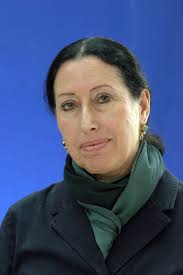
Professor Rachel Elior’s writings have stimulated lively discussions among scholars in her areas of research. These include, among others, early Jewish mysticism, the Dead Sea Scrolls, Messianism, Hasidism, and the role of women in Jewish culture. In her talk for the Taubman Symposia, presented as an online Webinar, she will speak about the significance of the Dead Sea Scrolls as a way of understanding the deep oppositional diversity of Jewish culture in Late Antiquity. Her talk addresses the dispute between, on one hand, the priestly writers (priests from the house of Zadok) who left the magnificent library of sacred writings discovered at Qumran, and on the other, the oral teachers known as the sages (Pharisees). The latter defined the Qumran library as “s’farim chitzonim,” books to remain outside of the emerging canon. As Elior explains, those matters involve everywhere the central themes of canon and censorship, and the shifting authority among sacred texts and their interpreters – exemplified by the adoption of the lunar over the solar calendar, a fundamental change in the source of authority. Join the Webinar on February 22 to hear Professor Elior’s talk on this fascinating but little-known chapter in Jewish history.
Elior studied at the Hebrew University/Jerusalem (PhD summa cum laude, 1976). She has taught at that institution since 1978 and serves there as the John and Golda Cohen Professor of Jewish Philosophy in the Department of Jewish Thought. Elior has published nine books on Jewish mysticism, six of which have been translated into English, Spanish, and Polish. Additionally, she has edited ten books, edited and annotated three further books, and authored 120 articles on mysticism. Her work has garnered numerous distinguished awards.
Sunday, February 22, 2026
10:00 a.m. PT
Connect on Zoom:
tinyurl.com/Taubman-Elior
For more information contact: Lee Rothfarb, rothfarb@ucsb.edu.